At home, I found myself in a warm and cozy chair, sifting through my mind. I was thinking deeply about the world (as I often do). I don’t remember why, but I started to wonder how my view of the world might change if I believed life was purposeless—that concepts of right and wrong were just human inventions. How would that shift my behavior? My perspective on life and others? Compared to how I see things now?
As I played with this perspective in my mind, I realized that if life were truly pointless, I wouldn’t change. I realized I would still care about people. I’d still want to protect, to nurture, to build something that helped the next generation. Purpose or not, that’s just who I am.
Then I started to wonder: who would actually change? Who would be affected by a shift like that?
I know some would take it as an opportunity to embrace their darker, selfish impulses. And unfortunately, selfishness can result in power and wealth by focusing on personal benefit at the expense of ethics, relationships, and the welfare of others. These types of people often find themselves in positions where they could help those in need in a major way—but don’t.
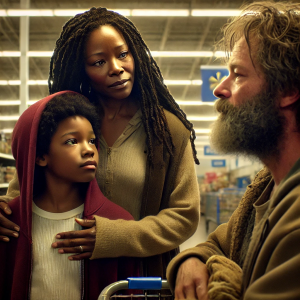
It reminded me of last year, in July of 2024. I was in Walmart with my son when a man who appeared homeless approached us with groceries in his hands. He politely asked if I could buy the few groceries he was holding because his family was hungry. It was bread, cheese, sandwich meat, and chocolate milk. I agreed. Soon after, a police officer came around the corner with a Walmart employee pointing the man out. I stood awkwardly as the officer escorted the man out of the store.
Afterwards, the Walmart employee asked if I was still going to purchase the groceries for him. I said yes. She then informed me that the man said he was going to wait for me at a nearby store. Unfortunately, after searching around for him, I couldn’t find him. I hope he and his family are okay. I ended up giving the groceries to someone else in need.
Looking back, I feel like I should’ve defended him. It’s not like he was trying to steal anything, and he had a family. Stores might believe helping people like that will encourage more of that behavior and disturb shoppers, but incidents like that are a sign of a bigger problem. I should’ve been more assertive about ensuring he got the food for his child—and our community should be more assertive about having better resources for those who are hungry.
That situation stuck with me because I understand that this is only the beginning. Life could get a lot worse. We are on the brink of World War 3. What will the homeless do then? How will those without shelter survive in extreme conditions? It bothers me knowing that I won’t be able to help much in those times—if at all. Honestly, I would barely be able to help myself.
It’s realizations like these that motivate me to connect to my community. I dream that I could build a massive support network focused on preparing our communities (especially the homeless) for critical emergencies. Unfortunately, I can’t hold my breath on that. That’s a big dream. Still, I’ll do what I can as an individual—which is donate, plan, and raise awareness. It may not seem like much now, but it’s a start.
Moments like that are exactly why I built Plaitx—because I don’t want to be helpless next time. Plaitx is a virtual marketplace that also hosts a physical flea market called the Big Hood Flea Market. Plaitx is what I would consider an emergency app. One of its primary goals is emergency preparedness, starting with solar power generators that anyone in the community can use to charge their devices. They will be able to use the generators at the flea market, get free supplies as well as purchase supplies, engage with the community, and receive prayer.
If you’re interested, [click here for a list of resources you’ll need to survive a critical emergency.] And if you’re interested in supporting Plaitx, [click here to learn how].
The future might be uncertain, but I believe in being prepared and connecting.
Love,
